
Funding requests for dietetic input…a ‘how to’ guide for case managers
As a case manager, it can be frustrating when you can see that your client has a clinical need that justifies dietetic input and yet your funding request gets declined. Or you are told by the funding party to just refer to an NHS dietitian or a nutritionist instead. What can you do to prevent this from happening?
Solicitors and insurers usually have a very good understanding of why post-trauma clients need to see a physiotherapist, psychologist and occupational therapist. What they are less familiar with, however, are the various ways that dietitians can help post-trauma clients and/or what a specialist dietitian can offer both the client and the multi-disciplinary team.
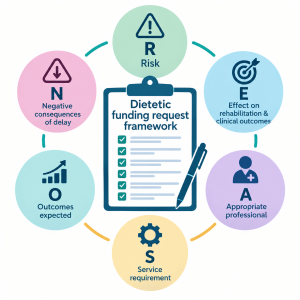
Funding is more likely to be approved when a request for specialist dietetic input is linked to a specific issue affecting rehabilitation outcomes and/or overall health risk. The REASON framework sets out the six elements that funders typically look for when making their decision, while nicely outlining the REASON the client needs to see a specialist dietitian.
Here is how to structure your funding request:
R = Risk
- Flag risks and concerns relating to diet, nutrition or weight (e.g. MUST score, upcoming surgery, delayed bone healing/non-union, pressure sores, increasing weight).
- Note other factors that raise the client’s risk (e.g. mental capacity, brain injury, mobility, mood, home environment).
- Example: [Client] is experiencing [nutrition-related or health concern]. This is evidenced by [objective measurements, symptoms, clinical findings or professional recommendations].
E = Effect on rehabilitation & clinical outcomes
- Link the input directly to reducing the risks identified above.
- Connect nutrition to a specific rehabilitation goal (e.g. wound healing, mobility, therapy participation).
- Example: The concern outlined above is currently affecting, or has the potential to affect, [healing, therapy participation, surgery, mobility, fatigue, quality of life or another rehabilitation outcome].
A = Appropriate professional (dietitian vs nutritionist)
- Confirm HCPC registration and specialist rehab/trauma experience relevant to the client.
- Note any specific expertise required (e.g. brain injury, bariatric surgery, enteral feeding).
- Example: A registered dietitian with [relevant specialist experience] is required to assess [relevant issues], identify modifiable nutrition and metabolic factors, and develop an appropriate intervention plan. A dietitian is needed (vs a nutritionist) due to the medical complexity of this client, the need for medical nutrition therapy to manage disease X {diabetes, hypothyroidism, neurogenic bowel, coeliac disease, IBS}, the need to understand various blood test results and medication, the need to liaise with the GP/medical consultants/MDT, and the need to assess the client for malnutrition and/or taste and smell loss.
S = Service requirement (NHS vs private)
- Explain if NHS provision isn’t suitable or timely (e.g. no local specialist service, waiting list, session limits).
- Confirm delivery needs: home visits, MDT liaison, carer training, reporting and review frequency.
- Example: Private input is requested because [clinical timescale, local NHS eligibility or capacity, home-visit requirement, need for MDT liaison, or reporting requirements]. The proposed service includes [assessment, report, dietary intervention, blood-test review, liaison, carer guidance and follow-up].
O = Outcomes expected
- Link outcomes to measurable rehabilitation progress (e.g. improved mobility, reduced complications).
- Note any reduction in future care or treatment costs.
- Example: The anticipated outcomes of dietetic input include [specific clinical and rehabilitation outcomes].
N = Negative consequences/risk if dietetic input is delayed
- Consider clinical or functional consequences (e.g. prolonged recovery, complications, readmission, ‘not fit’ for surgery).
- Consider cost consequences (e.g. increased care hours, extended case duration).
- Example: Without timely assessment, there is a risk that [specific consequences], which may delay rehabilitation and increase longer-term care or treatment costs.
Top tip: If a consultant, GP or expert witness has already recommended dietetic input, be sure to reference this alongside the REASON framework above — it strengthens the case considerably!
Why the REASON framework helps: Funders are weighing many requests against a limited budget. Structuring a request around risk, outcomes and the cost of delay — rather than a general description of need — gives the decision-maker exactly what they need to approve it quickly. Please get in touch if we can assist you with this process.
Click HERE to download a PDF of the REASON framework and funding request template.